Thursday, March 24, 2022

News brief: Antarctic 70 and Arctic 50 degrees above normal

 FILE - A drop of water falls off an iceberg melting in the Nuup Kangerlua Fjord near Nuuk in southwestern Greenland, Tuesday, Aug. 1, 2017. Earth’s poles are undergoing simultaneous freakish extreme heat with parts of Antarctica more than 70 degrees (40 degrees Celsius) warmer than average and areas of the Arctic more than 50 degrees (30 degrees Celsius) warmer than average. (AP Photo/David Goldman, File)

News Brief, Daily Courier, March 20, 2022

 “Antarctic 70 and Arctic 50 degrees above normal”

 “Earth’s poles are undergoing freakish extreme heat, with parts of Antarctica more than 70 degrees warmer than average, and areas of the Arctic more than 50 degrees above average.  Weather stations in Antarctica shattered records Friday as the region neared autumn.  The two-mile high Concordia station was at 10 degrees, which is about 70 degrees warmer than average, while the even higher Vostok station hit a shade above 0 degrees, beating the all-time record by 27 degrees, according to a tweet from extreme weather tracker Maximiliano Herrara.  It caught officials at the National Snow and Ice Data Center in Boulder, Colorado, by surprise said Center ice scientist Walt Meier.  ‘They are opposite seasons.  You don’t see the north and south poles both melting at the same time.  It’s definitely an unusual occurrence.’”

 “What the heck!” I said to my daughters.  I assumed the temperatures were Fahrenheit, since they didn’t say otherwise and this is the US. “Both temperatures are below freezing.  Nothing is melting!”  I looked up the stations to see which is Arctic and which is Antarctic.  They were both Antarctic.  We ended up deciding that they must be using Celsius.  But that would make a 70 degree difference a lot more intense: 158 degrees F, which it could not be. 

 Nowhere was any particular place in the Arctic mentioned.  I lived in Fairbanks, Alaska in the early ‘70s when we had a 73-degree rise in 24 hours, from -40 degrees F to 33 above.  Icicles were melting, and people were running around in boots and shorts.  I also saw a fall and winter, 1976-77, there when we had rain on Halloween and Thanksgiving, and we didn’t get snow that stuck until March.  (Interestingly, -40 is the same temperature in Fahrenheit and Celsius.)

 I looked up the headline of this brief and found many copies of the full article by Seth Borenstein of the Associated Press.  Almost all included both Fahrenheit and Celsius, though Fahrenheit was not labeled, until I came to the LA Times, which only gave Fahrenheit and yet did not label it.  Otherwise, the article was the same as the other Borenstein articles.  It appears to be the source for the Courier’s brief, which was edited a tad too brief to be accurate.   https://www.latimes.com/world-nation/story/2022-03-19/antarctica-and-arctic-70-and-50-degrees-above-normal  

 This article from U.S News is representative of most of the articles I perused: https://www.usnews.com/news/world/articles/2022-03-18/hot-poles-antarctica-arctic-70-and-50-degrees-above-normal. These show that temperatures in the Courier brief are indeed Fahrenheit.  All but the Courier’s brief included the single Antarctic station, Terra Nova, that is on the coast and was 14 degrees above freezing.  It is located on an inlet near the Ross Ice Shelf (a fact that I had to look up) which has been slowly melting and breaking up for decades.

 None of them included any particular place or temperature in the Arctic in the article itself, except to mention Greenland at the end, only half of which is within the Arctic Circle and which is brushed by the Gulf Stream, which Borenstein mentioned did not name.  Most of them also include a photo of dripping ice, from an iceberg in a Nuup Kangerlua Fjord near Nuuk, well outside of the Arctic Circle, about the same latitude as Iceland.

 I object strongly to statements by two weather scientists.  National Snow and Ice Data Center ice scientist Walt Meier said, “They are opposite seasons.  You don’t see the north and south poles both melting at the same time.  It’s definitely an unusual occurrence.” 

Spring and fall are not opposite except in time.  They begin 6 months apart, but their weather is much the same, though reversed in time.  Winter and summer have opposite temperatures, outside equatorial zones.  Both places where melting was reported in March were on coasts, one just inside and one outside the Arctic Circle.   

 University of Wisconsin meteorologist Matthew Lazzara said, regarding East Antarctica’s Dome C-ii, that logged 14 degrees (-10 degrees Celsius) Friday, where the normal is -45 degrees (-43 degrees Celsius): “That’s a temperature that you should see in January, not March. January is summer there. That’s dramatic.”

 January below the tropics is early summer and is cooler than March, late summer, after heating up for two months, just like July is cooler than September above the tropics.  Interestingly, March is also warmer than January in winter in Northern temperate zones.  If there is any month that places near the Arctic and Antarctic Circles latitudes would have melting at the same time, it’s March.  There probably is also a temperature inversion in high Antarctic mountains that makes it warmer above the inversion than below in the interior in winter, created by ice fog that settles in the valleys, as it did in Fairbanks when I lived there, which explains the record highs, though no melting, in the high mountains of Antarctica.


Saving our peach crop with mist

Grants Pass used to have a hard freeze problem mainly with apricots, which are the first fruit trees to bloom.  Our landscape management teacher told us to avoid growing apricots because we’d never get a crop here.   This year, it was peaches that were in danger of freezing their flowers off.

All this week, weather reports have shown a hard freeze coming Sunday morning after Saturday rain.  I have long seen on TV news how Florida orange growers deal with hard freezes, turning on sprinklers overnight to keep their flowers and fruit from freezing.  I decided to put my large mister made of PVC pipes, standing 6 feet tall with nine emitters on the pole, in the middle of my peach tree, which was in full bloom by Saturday, and turn it on overnight.   

People in my house were skeptical and thought of this as an experiment.  I knew it would work.  If it works in Florida, it will work anywhere, and it worked Sunday in my yard.

In 2000, our teacher told us that when liquid water turns to ice, it loses a lot of heat to its surroundings to make that phase change, just as water sucks in heat, cooling its surroundings, to make the phase change from liquid to vapor, something that can only happen over 41 degrees F.  Likewise, melting ice sucks heat and cools its surroundings when it changes to liquid, which we take advantage of to make homemade ice cream, salting the ice to melt the ice faster and freeze the ice cream mix as we stir it.  Ice is also highly insulative, so once the flowers were covered with ice, they didn’t freeze.

Every flower on that tree was still perfect.  Interestingly, I found that the mist spread a very long ways during the night.  I’d left a broom and standing dustpan about 50 feet north of the tree, leaning on a tent shed.  It was not only icy before the frost started to melt, it also had liquid water in the dustpan before the frost melted.

It was a freezing morning and it built up more ice as I took photos and then left the mister running when I went to play cribbage with a friend.  When I returned about an hour later, it was turned off and all the ice had melted.  The flowers look just like they did the day before.  The mister will stay in that tree until the danger of hard freezes passes.

 Published at GardenGrantsPass.blogspot.com.

Like Ratepayers for Fair Water and Sewer Pricing on Facebook.

 Rycke Brown, Natural Gardener          541-955-9040           rycke@gardener.com

Tuesday, December 21, 2021

Chickweed is fall and winter greens and medicine


Some of the biggest chickweed tops I've ever seen this year, with leaves 1 1/4 inch or more.

          Chickweed is a dependable fall and winter green for chickens and people.  It tastes like grass, sweet and lightly bitter, and makes good salad and sandwich greens or wilted salad for people.  Cut the just the top inch of stems with its new leaves and flowers for best eating.  The stems can be rather tough below that. Chop the tips for salad and sandwiches; cover with boiling water long enough to wilt the greens to eat it like spinach.  Save the water and drink it for the vitamins and minerals, and to help with weight loss.

Unlike dandelion and wild lettuce, it is not bitter when blooming, and is full of A, B and C vitamins, magnesium, iron, calcium and zinc.  This year, I am finding the chickweed leaves bigger than ever before under locusts by the river.

          Chickens love fresh chickweed best in fall and winter.  Chicks love the seeded plants in late spring for their seeds.  I just pull the stems by the handful and fill a grocery bag for my flock. 

Chickweed is also good for eye medicine.  Make a tea with the leaves, let it cool, and drip it into the eye.  It stings a little for a few minutes.  I’ve cleared up many cases of pink eye and kitten eye infections with chickweed tea.  If it doesn’t work, pink eye is not the reason one’s eyes are red, or you may be allergic to it.  I researched it this year and found many medicinal uses I’ve never thought about, including a salve recipe I intend to try.

          It grows best in our area by the river under locust other trees with soft leaves that are quickly eaten by worms and make rich soil.  I’ve seen some under shrubs by the post office.  It starts growing with the first fall rains, and blooms through the winter into late spring, when even the newest growth gets rather leggy and is not as good for salads and such.  This is a good time to pull quantities of the plant and spread it in a good growing location.  Once it has made enough seed, it dies down until fall.

To keep it available for medicine year-round in your garden where it is watered regularly, keep pulling the above-ground portion of the plant as it blooms, before it makes seed.  Being an annual, it will keep growing until it makes enough seed.  It is one plant that doesn’t make a crown between root and stems, so it can’t be stopped by cutting below the crown.  It tends to break off at or above ground level when one is pulling it, so ironically, the way to keep it in your garden all summer is to keep pulling it as it blooms.  The way to get rid of it all summer is to let it seed out in the spring, or smother it with mulch, the easiest way to lose it entirely.

Published 12-21-2021 at GardenGrantsPass.blogspot.com

Like Ratepayers for Fair Water and Sewer Pricing on Facebook

Rycke Brown, Natural Gardener          541-955-9040        rycke@gardener.com


An article with almost too much information: https://www.healthbenefitstimes.com/chickweed/

This one has a concise rundown of its vitamins, minerals, and medicinal constituents:

https://draxe.com/nutrition/chickweed/


Saturday, December 4, 2021

Give us a real break


New Water Treatment Plant site, cleaned for construction.

            Council decided to give the New Water Treatment Plant Project three million dollars of our ARPA funding for a down payment on our new water plant.  You also plan to give ratepayers a small break on our rates in return.  

At first, the City and The Daily Courier said that the City would cancel the last two years of base rate raises that are supposed to help pay the loan.  But they also said that the unit rate raises for the new plant would continue, as well as inflation and raising the separate new plant debt payment fee.  Lately, Courier articles and City staff have become less specific about which rates would be curtailed.

If you stop increasing base rates, but keep increasing unit rates, as unit rates rise, ratepayers will collectively cut back further on water use, decreasing revenue.  This will make the City raise unit and base rates to cover the overhead, the monthly cost of having a water plant, clawing back our expected $8 savings on the base rate.  Or the City might dip into the ARPA $3,000,000 to cover it, decreasing our future down payment and increasing our interest.

If you stopped the new plant unit rate raises instead of base rates, we would be paying more from base rates and no more for our use, and our rates might stabilize. 

When you passed the new plant payment fee, we were told that it would not rise by inflation and would go away when the debt was paid.

We were not told then that the fee would not cover the whole loan.  Twenty-two percent of eighty million dollars is being put on our base and unit rates, increasing by 5.28%, plus inflation, yearly for five years, will never go away, and will rise by inflation, every year until this rationing rate system is reformed.

You, our Council, can set base rates to cover all overhead: debt payments; operations; administration; maintenance; and actual inflation of plant costs.  You can lower all unit rates to one rate, paying for only unit costs, which rise and fall with our water use.  This was the way we paid for our plant and the cost of producing and delivering clean water with it, for over fifty years.  Grants Pass was watered; rates were low and stable.  To return to that rate system would be a real and permanent improvement in our health, wealth, safety, and happiness.     

Speech to the Grants Pass City Council, 12-1-2021, shared with the Josephine County Commissioners, published at GardenGrantsPass.blogspot.com.

Like Ratepayers for Fair Water and Sewer Pricing on Facebook

 Rycke Brown, Natural Gardener          541-955-9040           rycke@gardener.com

Saturday, November 20, 2021

Some People Can’t See the Good


Dear Editor,

             The Daily Courier published an article 11-17-2021, “IV Water District makes plea for state help," regarding the problems caused by illegal pot growing operations disguised as hemp farms.  One of the complaints in the article is that some of these farms are buying bulk water from Cave Junction's station.  Some people just don't know a good thing when they see it.

            City bulk water is legal to buy for all uses.  Cave Junction’s bulk rates are $30/1000 gallons.  Ratepayers of Cave Junction pay a top-tier rate of $2.05/100 cubic feet, or $2.74/1000g, for water delivered to their taps by pipelines. 

Everyone who buys bulk water at $30/1000g is paying some of the overhead that city ratepayers are not paying as they cut back on irrigation and other water use to pay high unit rates.  Bulk water users keep ratepayers’ unit and base rates from climbing still higher to pay the overhead, the monthly cost of having a water system, as they keep cutting back on use. 

This is what modern city rate systems do, rationing water by price, with a base rate too low to cover the overhead and high unit rates to discourage use.  But the City thereby depends on high unit rates to cover the overhead, which leaves it always chasing the overhead.  

Businesses can’t survive this way.  But water and sewer plants can; they are natural monopolies.  But they don’t have to; the Council could set base rates to cover all overhead and stop rationing water by rates.


Sincerely,


Rycke Brown

Friday, November 19, 2021

Birds Love a Fountain


            We bought a bird house about twenty years ago, which occasionally was used by birds over the years, but not every year.  This year, my daughter’s mate used cedar fence boards to make sills for our new windows.  He had pieces of scrap that he built a new style of birdhouse with and hung 3 of them along the east wall of our house this spring as sparrows mobbed to mate.   All the boxes were quickly taken.


            A couple years before, we built a chicken run around 3 sides of our toolshed with nest boxes in the east wall of the shed, shaded and sheltered by our neighbor’s tall timber bamboo, and put perches outside under the bamboo and a large south overhang.  Hens are well-insulated birds; they do fine outside in winter here.  That winter, I started feeding them cooked brown rice and meat along with kitchen scraps, grains, greens and mulch for growing worms.  Sparrows found the soft rice very much to their liking as well.

            This summer, I traded $300 worth of gardening labor for a wonderful heavy fountain that had not been filled for years.  We put it in my front yard near a sweet gum and a witch hazel full of evergreen China Blue vine, out front of our picture window.  Having to top off the fountain every day helps me remember to water my potted plants and pull weeds out front. 

The sparrows love the fountain.  Other birds also visit: hummingbirds; chickadees; a flock of quick, tiny birds; and a jay.   We have watched the smaller birds eating pests off our garden plants.  Recently, we added a hummingbird feeder outside our dining room window which is being well used.

The "quick, tiny birds" were Ruby-Crowned Kinglets. I finally got a good look at one and found its name by searching "tiny gray birds with red spot on head."

Having water, food, and bird houses and a huge twisty willow tree in our yard has filled our yard with birds.  This fall, our sparrows and hummingbirds raised an extra set of young in October because they had everything they need.  A hummingbird was recently singing his territory.

We have cats outdoors.  They haven’t made a dent in the bird population.  What has been depleting the number of birds, bees, and bugs in our city and our world is lack of water.  We rarely see or hear mosquitoes in Grants Pass anymore.  Because of water-rationing rates, we haven’t been watering our yards or our birds like we used to during the 50 years when water was so cheap to use, we thought of it as free.

Speech to the Grants Pass City Council, 11-17-2021, shared with the Josephine County Commissioners,

 published at GardenGrantsPass.blogspot.com.

Like Ratepayers for Fair Water and Sewer Pricing on Facebook

 Rycke Brown, Natural Gardener          541-955-9040           rycke@gardener.com

Monday, November 8, 2021

Tokay Heights has a dump in the middle--Open email

To: the Josephine County Board of Commissioners 

     Grants Pass City Council, Mayor and City Manager

Honorable Public Servants,

As I walked the NE ward of Grants Pass in late October, placing water rate reform leaflets at doors of residences along NE Tokay Heights, I came upon a residential dump.  

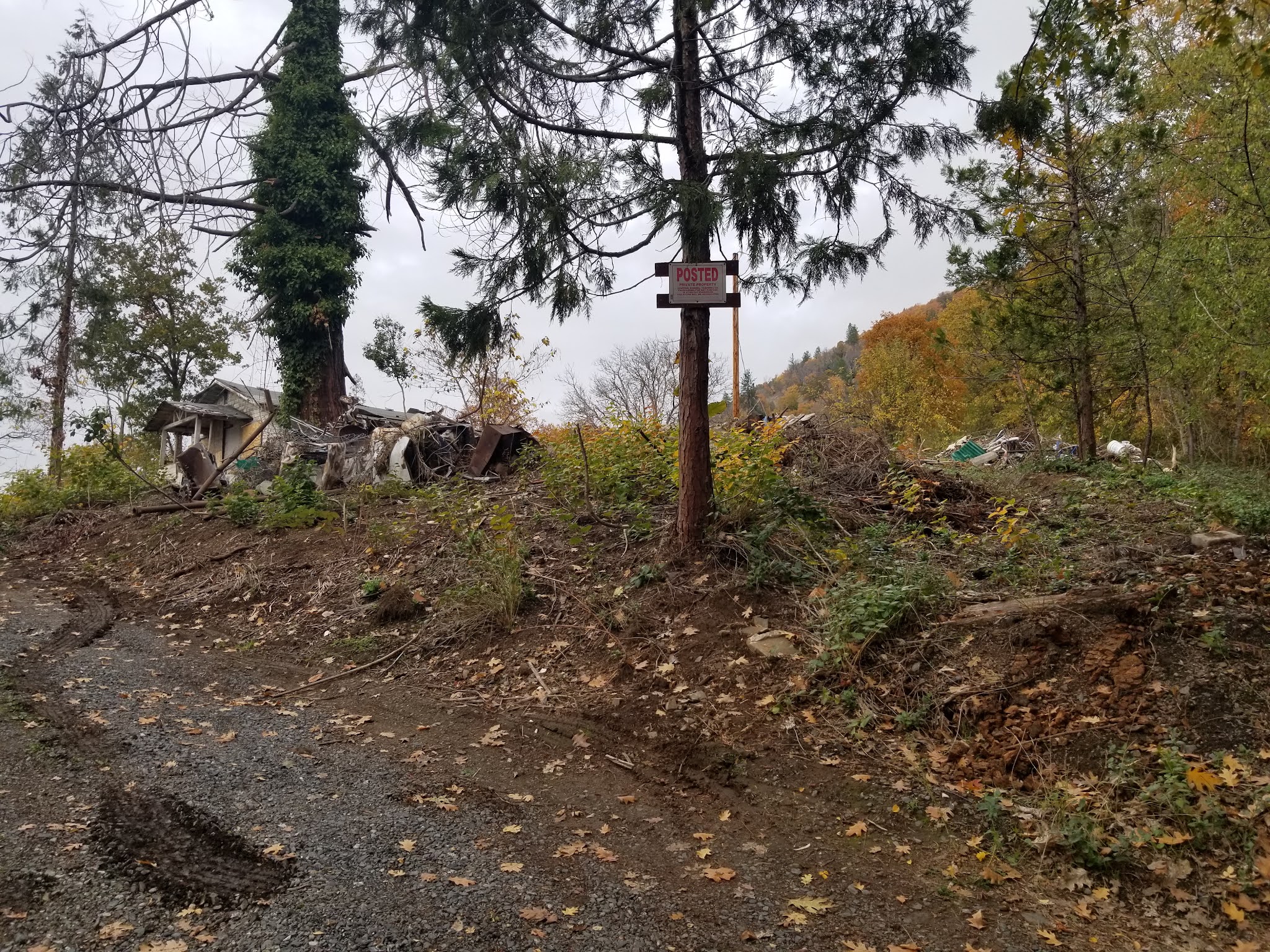
This is not just some random abandoned property, trashed by those who seek shelter on it; it appears to be a business dump for the owner of 701 NE Tokay Heights, General Property Group LLC.  It is .99 acre of garbage and wood trash left in dump-truck-size piles and mixed into the dirt.  Two little houses on that property are falling apart among the trash piles.

It is along a stretch of gravel road between the two paved and developed ends of NE Tokay Heights.  At the Northwest end of that gravel, at the top of NE Elida, there are no signs regarding trespassing.  At the Southwest end, at the top of NE A Street and just below other residences on Tokay Heights, there is a no trespassing/private property sign.  But one does not have to trespass to see it is a dump from either end.  

It exists in a heart-shaped two-property cutout on that edge of the city, outside the city limits.  The owner of the neighboring cut-out property tries to keep trespassers off it when he sees them.

Sincerely yours,

Rycke